




The Guardian of the Zeller Horn
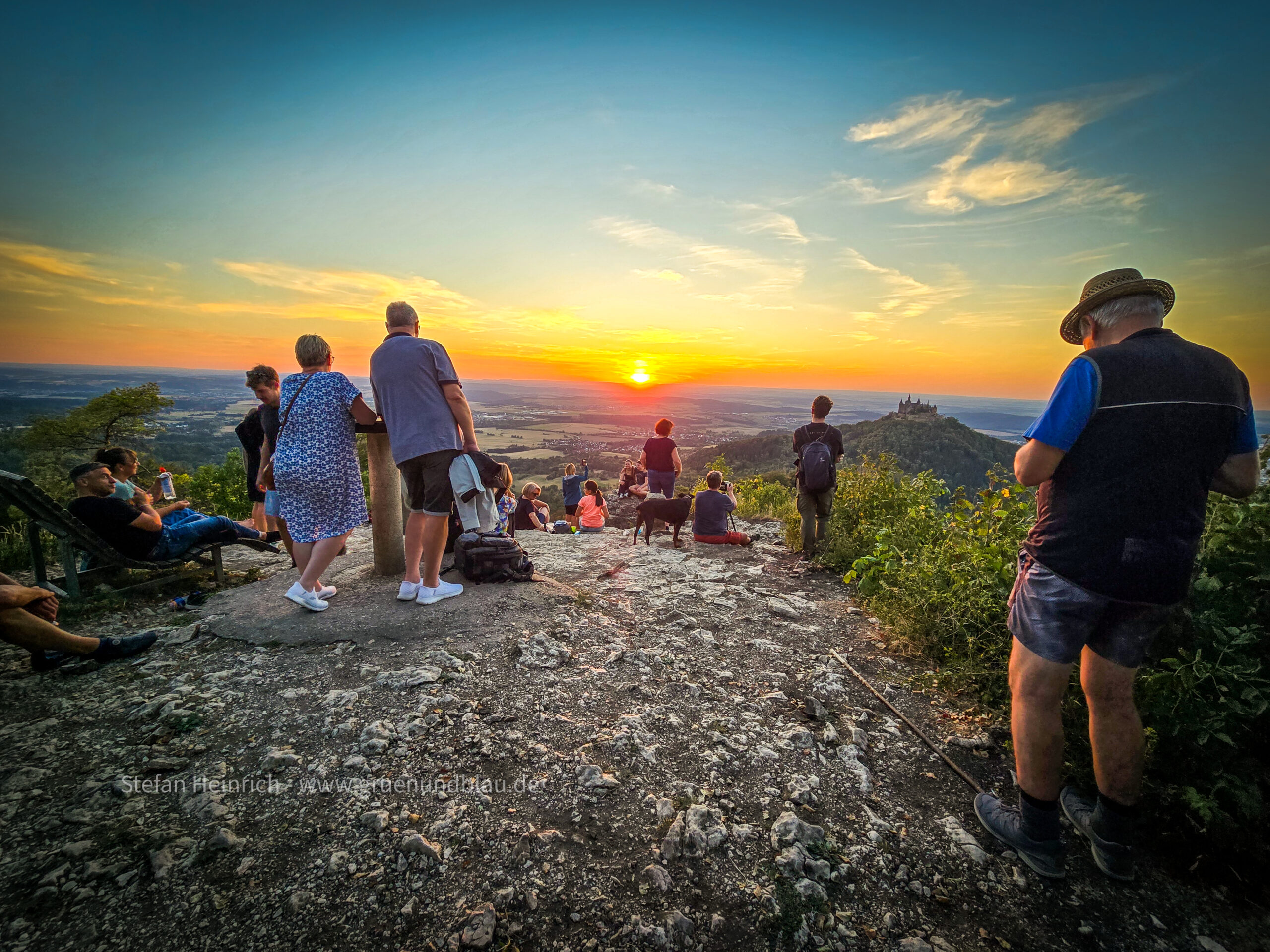
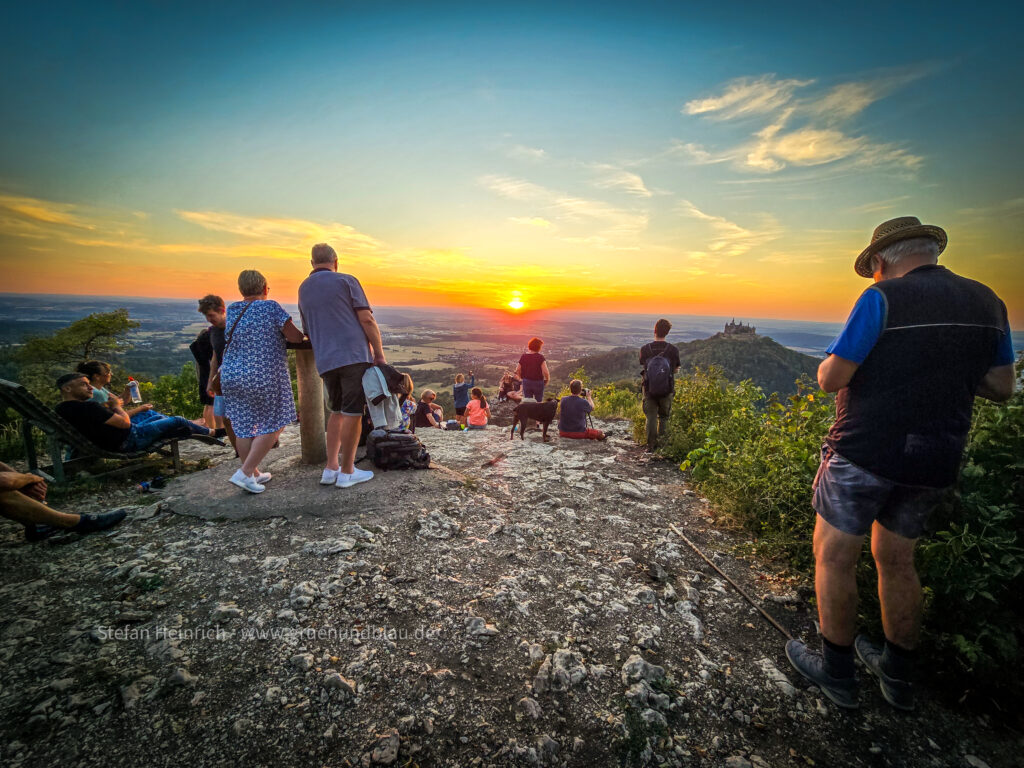
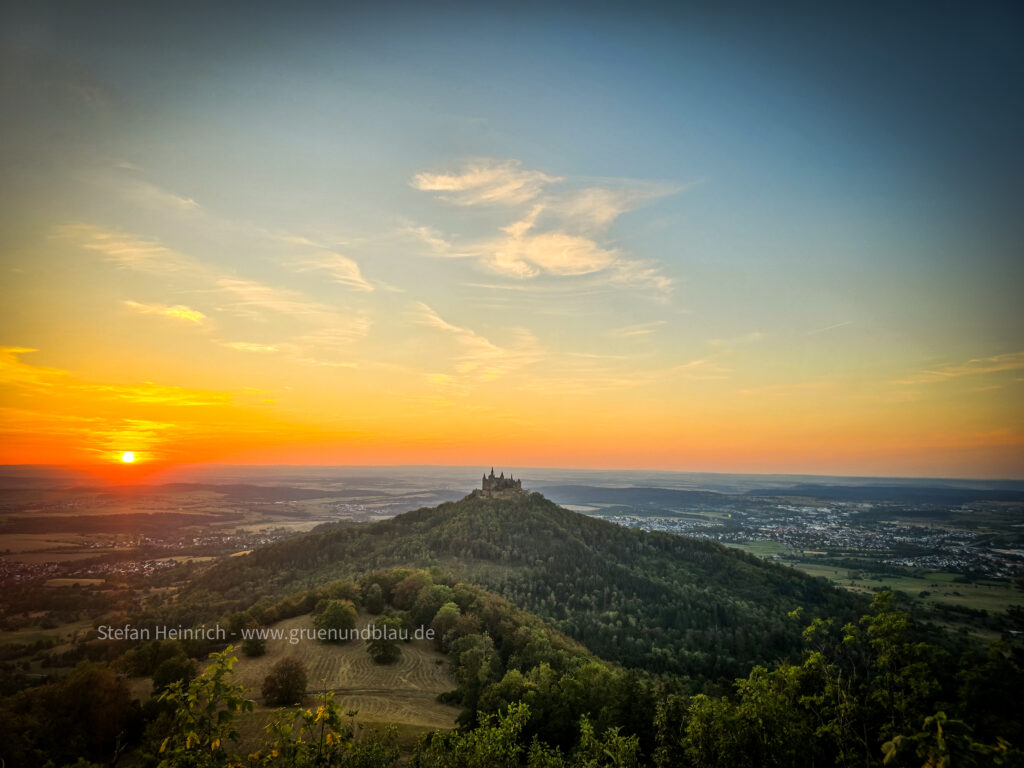
The evening sun cast long, golden shadows across the edge of the Swabian Alb as I reached my destination for the day. I was standing on the rocky outcrop of the Zeller Horn, one of those breathtaking viewpoints directly opposite Hohenzollern Castle. Far below lay the small town of Hechingen, gently nestling in a sea of green rolling hills, while across on the witness hill, the mighty fortress sat like a crown in the evening light.
It was a magical place. A few weathered park benches invited visitors to set down their backpacks, stretch out their legs, and simply enjoy the moment. I was not the only one drawn by the spell of this hour: a few hikers were resting nearby, chatting softly in the grass, and a bit further along, a landscape photographer waited patiently with his dog. His tripod was already set up, the camera aimed precisely at the fiery silhouette of the castle. Everything felt peaceful, almost floating in the transition from day to night.
I was just losing myself in the tranquil panorama when I heard footsteps in the leaves. The dry wood of a long walking stick snapped in the rhythm of a slow, yet surprisingly steady stride.
Out of the shadows of the dense beech trees stepped an old man. His figure had something entirely timeless about it: he wore a wide-brimmed straw hat that kept his face almost completely in shadow, and he leaned on a gnarled wooden staff that was nearly as tall as he was. The man paused, adjusted his hat slightly backward, and gazed silently out across the wide country into the plains. Then he turned around, headed purposefully toward my bench, and stopped right in front of it.

“May I join you?” he asked in a deep, slightly raspy voice.
“Of course,” I replied, sliding over a bit. “There’s plenty of room.”
The old man sat down slowly. He wrapped both hands around the knob of his giant wooden staff, rested his chin on his knuckles, and stared across at Hohenzollern Castle.
“I’ll say just one thing, then I’ll be quiet, for I don’t wish to disturb anyone,” he began abruptly, without so much as looking over at me. “Today is another fantastic evening to gaze upon the castle.”
I chuckled at the strange formality of his first sentence, but I was glad for the conversation. “That’s true,” I replied smoothly. “The visibility today is incredible. You can see endlessly far into the countryside.”
The old man nodded deliberately, without changing his posture. “I’ll say just one thing to that, then I’ll be quiet again: you can look all the way from the great city of Stuttgart, where they built that modern television tower, over to Rottweil, where they recently put up that other, even taller tower.”
His phrasing sounded wonderfully old-fashioned. I turned a bit more toward him.
“I actually wanted to take a closer look at the castle over there today,” I shared openly. “But when I stood down at the gate, I was turned away. Fully reserved for a closed, private event.”
The old man let out a soft, dry chuckle. “I’ll say just one more thing… They have to host such celebrations often. For they must pay for the castle. A thing like that is expensive. Very expensive.”
“Who actually owns the estate today?” I inquired further.
He stroked the worn wood of his walking stick with his wrinkled hand. “The walls you see over there aren’t very old at all. Perhaps a hundred and fifty years, or only a little more. The former lords of that steep mountain had moved away long ago, having lost interest. But a young man from the family eventually visited the area again while he was on his grand educational tour. He found the old castle there, which by then was nothing more than a romantic, overgrown ruin. And he decided on the spot to have it rebuilt.”
“But surely not as a real, defensible castle anymore?” I chimed in.
He shook his head slowly. The straw hat cast deep shadows over his face. “No. As a romantic dream castle. Some didn’t like that one bit.”
I observed the old man’s profile closely while he spoke. There was a subtle, almost bitter sharpness in the way he emphasized his words. For a brief, bizarre moment, I didn’t get the impression that I was listening to someone interested in history, but rather to someone who had taken this reconstruction as a personal insult.
“But today it’s wonderful to look at,” I tried to defend the magnificent scenery. “A real fairytale castle.”
The man straightened up slightly. His knuckles turned white against the wooden staff.
“I’ll say only one more thing, then I’ll be silent forever: they say there was once a watchman on the ruins of the old castle. He had fallen asleep on duty—weary from endless watches—and so failed to sound the alarm when the enemy approached in the cover of night. As punishment for his failure, he was condemned to guard the ruins for eternity. And believe me: he still takes his duty very seriously to this day.”
I smiled, amused by this sudden detour into the realm of ghosts. “But then he could just as easily guard the new castle today! What’s the difference anyway? Surely ghosts aren’t that particular about architectural history,” I added with a wink.
As the word “ghosts” fell, a strange shift came over the old man. He snapped his back straight so suddenly that the wood of the bench creaked softly. Instinctively, I turned my face fully toward him.
He wasn’t looking at me. His gaze was fixed sharply on the dark battlements across on the Zeller mountain.
“I’ll say just one more thing,” he said, and his voice suddenly sounded hard as granite. “The honorable soldiers of the old guard often cannot tell the difference… not between enemies who once came charging up the castle roaring with drawn blades, and today’s tourists, who likewise burst into the courtyard shouting and yelling loudly. And so, unfortunately, over the years, there have been a few… mix-ups.”
He paused. Then he added very softly, almost mumbling to himself: “None of which I was certainly responsible for!”
A chilling shiver suddenly ran down my spine. The witty comeback stuck in my throat. The man was no longer speaking like a storyteller passing on local legends. He was speaking like a witness. Like someone who had stood guard himself.
Slowly, without haste, he pushed himself up and stood. But he no longer used his long wooden staff to lean on. He grasped it lower down, holding it upright and close to his side—in the exact posture of a medieval guard holding a halberd as a barrier. His shadow had grown giant in the fading light.
“But the others fared no better,” he continued, without looking at me. “The guardian of the old Lichtenstein Castle, not far from here to the east… they simply replaced him with a ticket booth. And other comrades suffered a similar fate.”
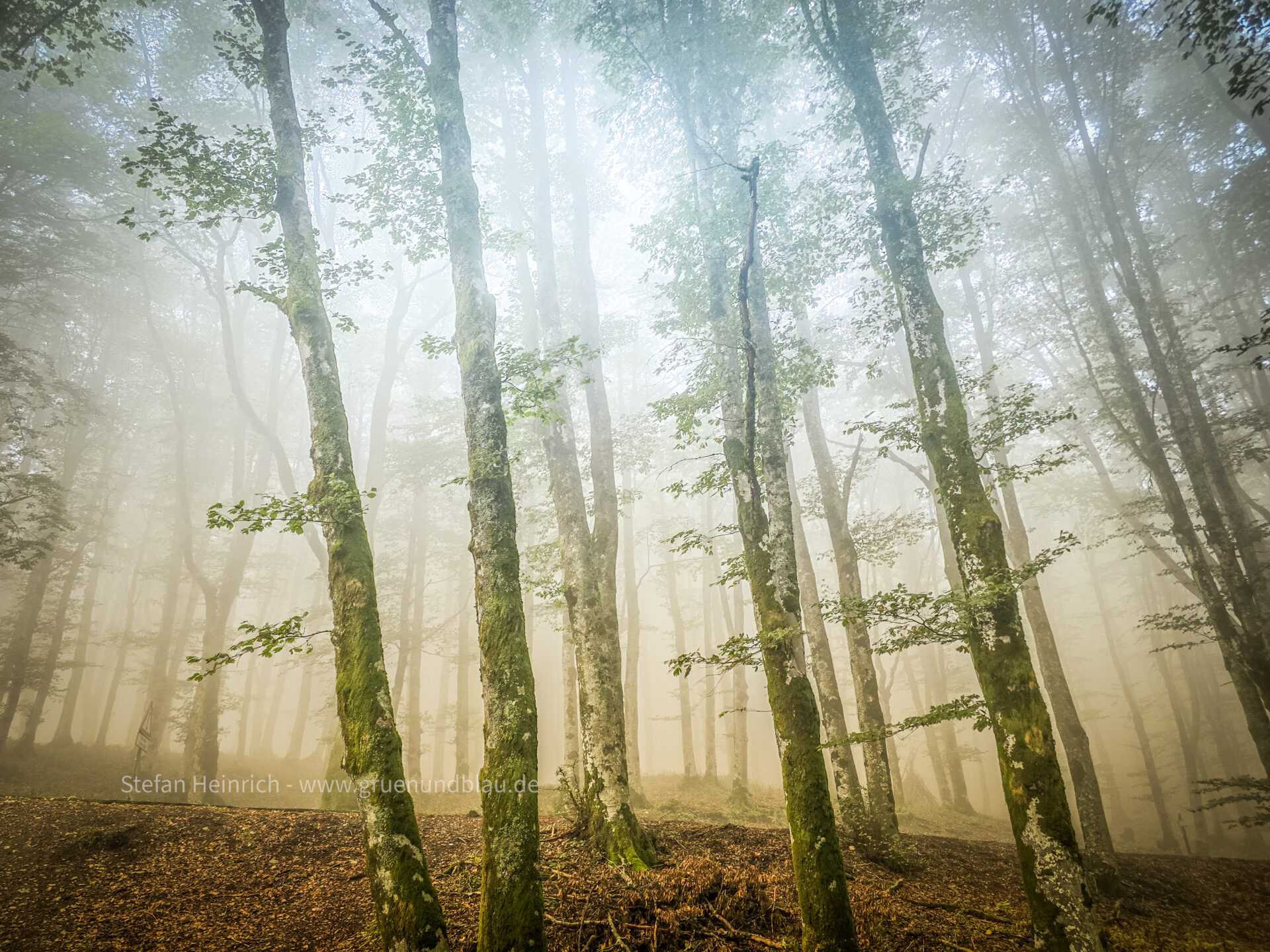
It had become almost completely dark by now. The sun had long sunk below the horizon, and the cool night wind swept through the treetops. The dense beech forest directly behind our backs was nothing more than an impenetrable, black wall. The other hikers and the photographer were gone. We were entirely alone on the cliff.
To bridge the sudden, suffocating silence, I tried a nervous joke.
“Well, I suppose that’s progress, isn’t it? You have to make money with castles these days. In the past, castle owners demanded road tolls from merchants—and today they demand entrance fees from visitors. The principle is the same, really.”
The old man remained completely motionless. Darkness seemed to envelop him.
“I’ll say one more thing, then I’ll be silent forever,” his voice whispered out from the shadow of his straw hat. “The old tolls were just. For we were the ones who built the roads after all, and defended them with our blood. Today road tolls are still demanded, yes… but the coins no longer go to those who build the road. They go far away. They are squandered there by people who have never laid a single stone upon another in their entire lives!”
His words echoed in the cool evening air. I thought briefly about what he had said. There was a deep, almost tragic truth in his words. I took a deep breath and turned fully toward the bench to give him a considered reply.
“You know, you might actually have a point there…” I began.
But the words died in the wind.
Beside me, there was no one. The wooden park bench was empty.
I leaped up, my heart taking a violent leap. “Hello?” I called out into the darkness.
Nothing. No rustling in the dry leaves, no snapping of twigs, no sound of receding footsteps. I turned around frantically in a full circle. Behind me rose only the black, silent wall of the dense forest. It was completely impossible for an old man with a long walking stick to have vanished silently into that underbrush in just two seconds.
The wind howled softly over the rocky edge of the Zeller Horn. I stood completely alone in the dark, the sound of my own rapid breathing the only noise for miles around.
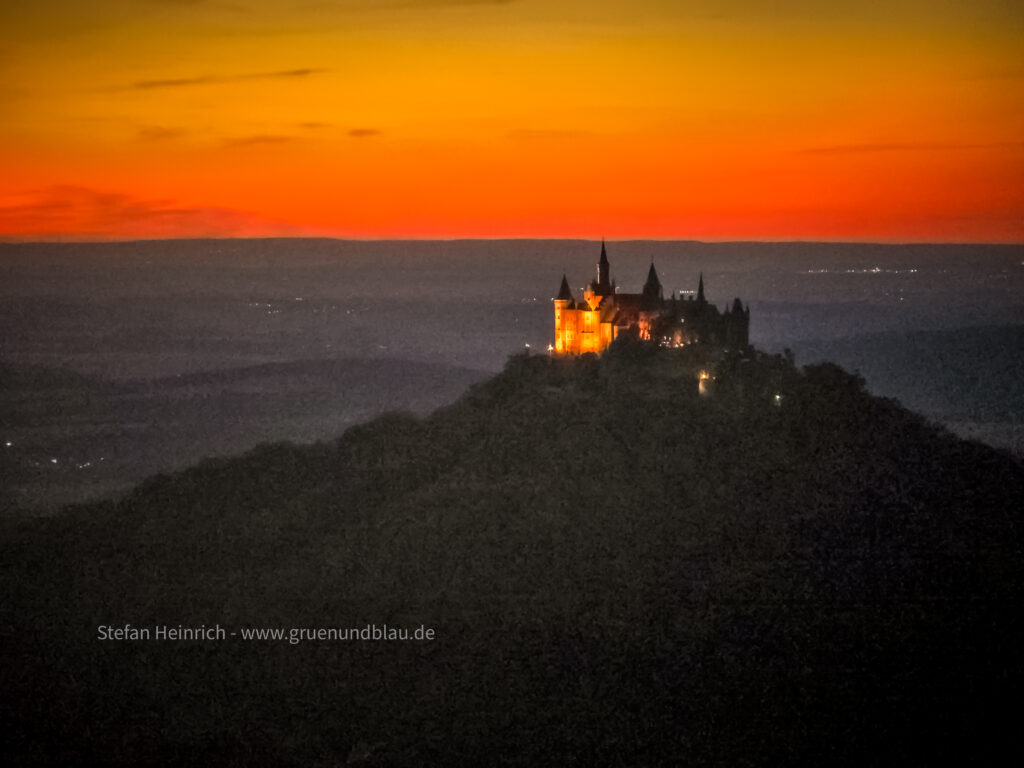
It took me a few long moments to calm my racing pulse. Hesitantly, I reached for my camera. Across on the dark mountain, Hohenzollern Castle now shone in the bright glare of spotlights—a gleaming, isolated fortress in the night, greeting from a time long forgotten.
I raised the camera, pressed the shutter, and captured the image. The glow of the display was the only light for miles around.
Thoughtfully, I packed up my things, strapped my backpack tight, and took the narrow path back to the parking lot. With every step through the dark forest, I involuntarily looked back, half-expecting to hear the rhythmic thud of a long wooden stick in the leaves. But the forest remained silent.