




Montserrat Monastery – The Accounting of Heaven
We need to talk about parking ticket machines for a second. There are those days in vanlife when everything goes like clockwork. And then there are Tuesdays at the foot of Montserrat. I was standing in front of the barrier to the day-use parking lot in my yellow postal van, the line behind me was growing impatient, and the bulky metal monster of a pay station steadfastly refused to accept my credit card.
“Card invalid,” flashed the pixelated display.
I sighed. “Come on, pal. I just want to park under these jagged rocks for a few hours, stretch my legs, and maybe figure out why people have been pilgriming up this mountain for a thousand years.”
I slapped the flat of my hand against the metal side panel. A hollow clang echoed through the cool mountain air. I gave the machine a bit of a shake by the card slot—just the usual, expert persuasion tactic every driver knows by heart.
A nasty, high-pitched hum kicked in. The display started flickering wildly, throwing out hieroglyphs followed by an error message that was definitely not written in Spanish or Catalan: “Error 0x880: Temporal Loop Activated.”
“What the…?”
Before I could finish the thought, reality snapped shut like an old rubber band. The chug of my van’s diesel engine went silent. The smell of exhaust fumes and damp pine needles was abruptly replaced by the pungent stench of unwashed wool, cold candle wax, and very old cheese.
I blinked. The parking lot was gone. My postal van was gone.
I was no longer standing in front of a parking barrier, but right in the middle of a drafty, gloomy room with thick stone walls. Seated before me at a massive oak table were three men, illuminated by the meager glow of two smoking tallow candles. They were dressed in heavy cloth and long robes, staring at me in complete shock.

“Where… where’s the scanner slot?” I stammered, pulling my blue cap low over my face as I tried to process the situation rationally. Perhaps that wasn’t cinnamon in my morning oatmeal, but hallucinogenic mushrooms. Or maybe the Catalan heat had finally fried my brain once and for all.
“Who are you, stranger?” called out the man in the middle. He wore a slightly lopsided bishop’s miter and held a half-eaten chicken leg like a scepter. “And what is that strange blue headpiece? Is that some sort of heresy from Zaragoza?”
“I… I just wanted to pay ten euros,” I said cautiously.
“Ten euros?” chimed in the man to his left. He was as thin as a dried prune and sat behind a rather modest pile of silver coins. “What is a euro? Does that sound like hard currency? If so, hand it over! The Diocese of Manresa is broke!”
I blinked again. Manresa? Broke? Bishop?
The bishop sighed deeply, forgot about me for a moment, and gestured dramatically with the chicken bone in the air. “We have a hole in our budget bigger than the gorges of that blasted mountain behind us! The peasants pay their tithes in rancid butter, the merchants bypass our toll bridges, and the Pope is threatening to strip my miter if we don’t fix the cathedral roof soon. Berenguer, tell me we still have gold!”
The thin man—obviously the Minister of Finance—shook his head mournfully and flicked the small wooden chest in front of him. It gave off a depressingly hollow sound. “Nothing, Your Eminence. Unless we conjure up a miracle within the next month, we’ll have to run the Mass on a shoestring budget and dilute the communion wine.”
“A miracle…” muttered the third man in the group. He had well-groomed hands, a clever glint in his eye, and was unrolling a sheet of parchment. He was, without a doubt, the medieval PR manager. “We don’t need a small miracle. A healing spring won’t get any peasant to part with their coin these days. People want the whole package: lights, music, untouchable mysticism!”
I leaned carefully against the cold stone wall. Okay, pep talk to my brain: Either you just collapsed on the asphalt and are dreaming the biggest nonsense of your life, or you are witnessing the birth of one of Europe’s greatest legends.

“Listen here,” the PR specialist said, snapping his fingers with enthusiasm. “We take a few shepherd kids. They’ll believe anything if you promise them a loaf of bread. We send them to the foot of Montserrat on a Saturday evening. We hide a few men in the bushes to wave torches and play the flute.”
“Flute?” the bishop asked skeptically. “You think that will convince the masses?”
“Angelic singing, Your Eminence!” the PR man corrected with a broad grin. “We’ll call it heavenly melodies. The kids will run to the village, raving about the light and the voices. The following Saturday, you, the Bishop of Manresa, show up in full regalia. We pretend to find a carved statue of the Virgin Mary in a cave.”
The Finance Minister perked up. His eyes turned greedy. “And then? How do we monetize that?”
“Simple, Berenguer! We act as if we’re going to carry the statue to Manresa. But after just ten yards, you stop, contort your face in pain, and cry out: ‘Alas! She has grown as heavy as the mountain itself!’ We claim the Holy Virgin refuses to leave Montserrat. She WANTS to stay right here!”
The bishop slammed his fist onto the table so hard the candles wobbled. “Brilliant! If the statue won’t come to the faithful, the faithful must come to the statue! We’ll build a chapel! No, a monastery! We’ll charge road tolls, sell devotional items, burn candles for cash, and later we’ll even get the city of Florence to pay for the lamp oil!”
“Brilliant,” whispered the Finance Minister, tears of emotion welling up in his eyes. “It will fill the treasury for centuries! A marketing masterpiece!”
They grinned at each other, intoxicated by their own coup. The PR manager whipped out a quill to draft the deployment plan for the shepherd children, while the Finance Minister beamingly placed both hands on his little treasure chest.
“To the Miracle of Montserrat!” shouted the bishop.
The Finance Minister snapped the wooden lid shut with a loud, dry CLACK.
CLACK.
The sound didn’t echo through a stone room. It sounded metallic.
In an instant, the cool candlelight was replaced by the glaring Catalan sunshine. The smell of cold cheese vanished, substituted by the familiar scent of warm asphalt and diesel exhaust.
I blinked.
I was standing in the parking lot again. My hand was still resting against the housing of the pay station. With a quiet mechanical hum, the machine’s slot spat out a small, white paper ticket.
“Thank you. Please display clearly behind your windshield.”
I stared at the ticket. Then I stared at the square, gray machine that just a moment ago had been shaped like the Finance Minister’s wooden chest. Behind me, a Spanish hatchback honked peevishly.
“Yeah, yeah, hold your horses!” I called out, grabbed the ticket, and climbed back into my postal van on shaky knees.
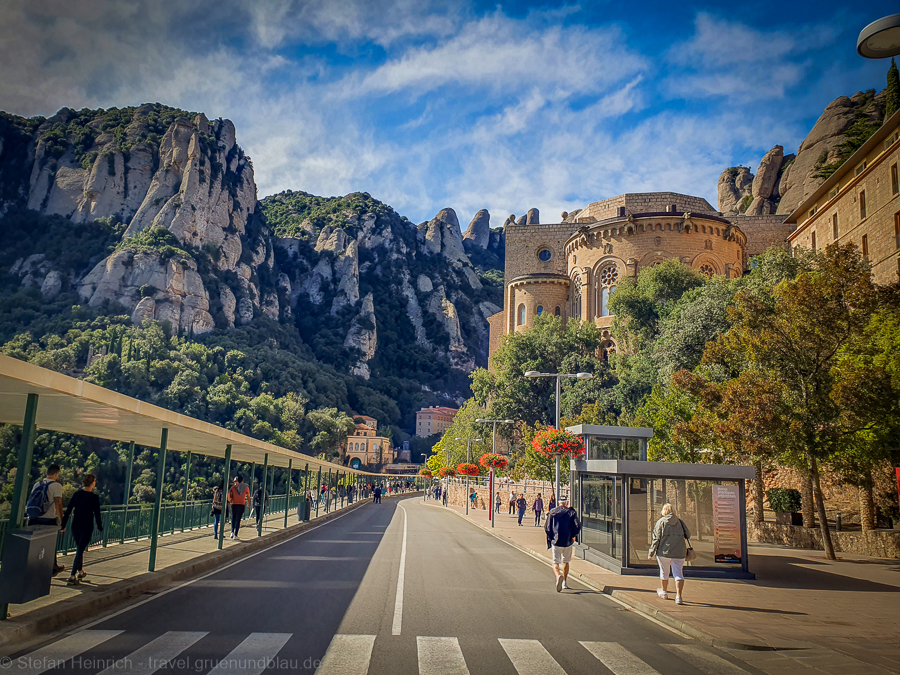
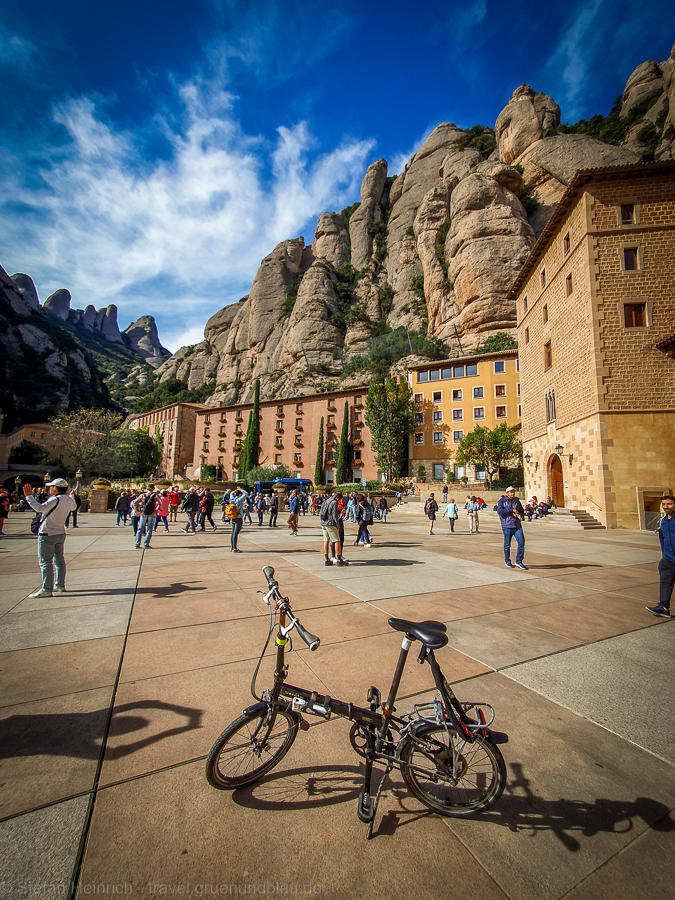
I drove slowly onto the lot, parked the van, and looked up at the bizarre, fantastic rock needles of Montserrat reaching into the sky like petrified fingers. Somewhere up there lay the Santa Cova cave. Somewhere up there sat the Moreneta.
I grabbed my notebook from the dashboard, tipped my blue cap with a chuckle, and shook my head.
Sometimes history is just that: a damn good marketing campaign—and a parking ticket machine with just the right dose of humor at just the right time.