


Montserrat Monastery – The Accounting of Heaven

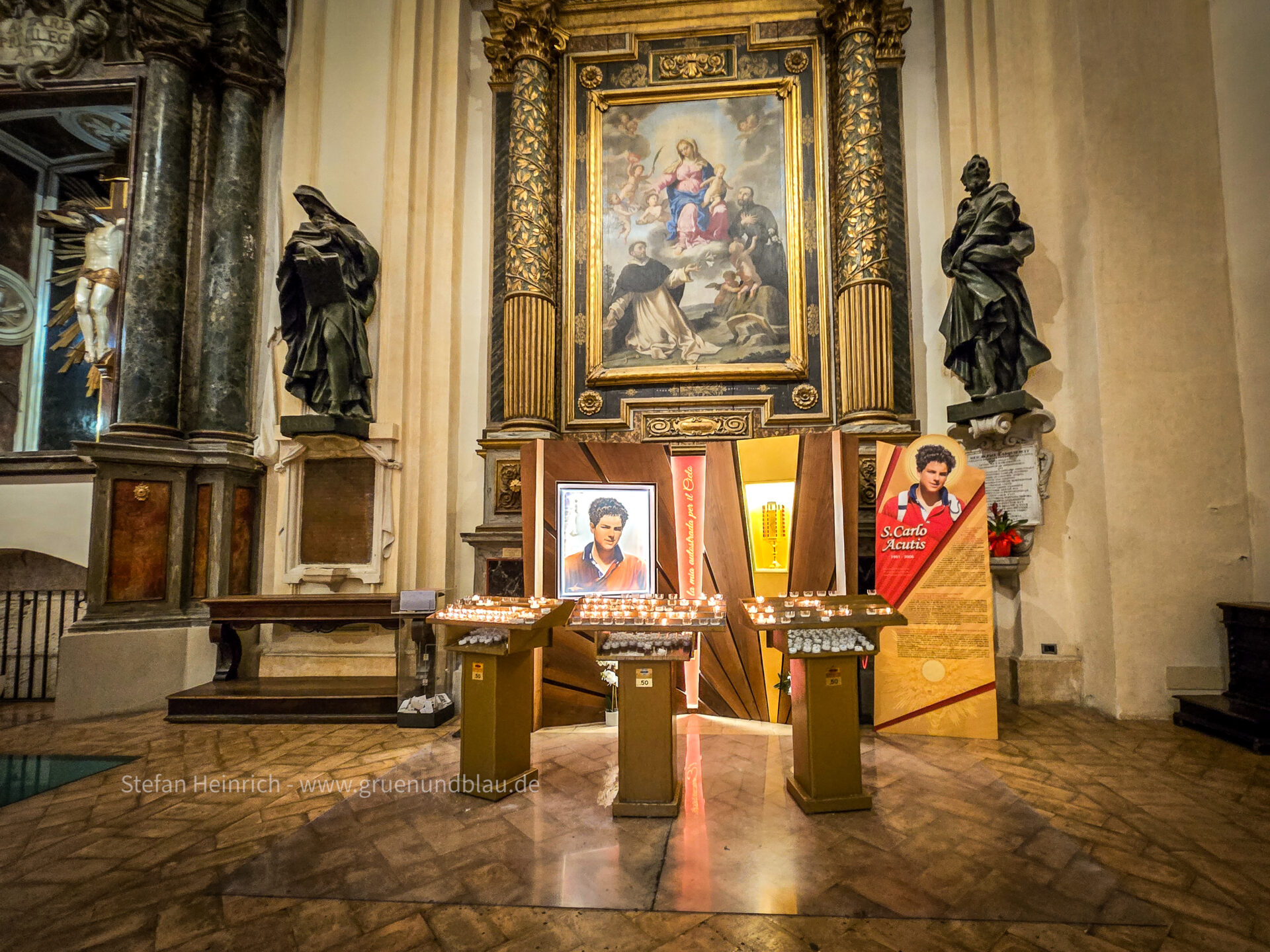
Montserrat Monastery – The Accounting of Heaven We need to talk about parking ticket machines for a second. There are those days in vanlife when everything goes like clockwork. And then there are Tuesdays at the foot of Montserrat. I was standing in front of the barrier to the day-use parking lot in my yellow postal van, the line behind me was growing impatient, and the bulky metal monster of a pay station steadfastly refused to accept my credit card. “Card invalid,” flashed the pixelated display. I sighed. “Come on, pal. I just want to park under these jagged rocks for a few hours, stretch my legs, and maybe figure out why people have been pilgriming up this mountain for a thousand years.” I slapped the flat of my hand against the metal side panel. A hollow clang echoed through the cool mountain air. I gave the machine a bit of a shake by the card slot—just the usual, expert persuasion tactic every driver knows by heart. A nasty, high-pitched hum kicked in. The display started flickering wildly, throwing out hieroglyphs followed by an error message that was definitely not written in Spanish or Catalan: “Error 0x880: Temporal Loop Activated.” “What the…?” Before I could finish the thought, reality snapped shut like an old rubber band. The chug of my van’s diesel engine went silent. The smell of exhaust fumes and damp pine needles was abruptly replaced by the pungent stench of unwashed wool, cold candle wax, and very old cheese. I blinked. The parking lot was gone. My postal van was gone. I was no longer standing in front of a parking barrier, but right in the middle of a drafty, gloomy room with thick stone walls. Seated before me at a massive oak table were three men, illuminated by the meager glow of two smoking tallow candles. They were dressed in heavy cloth and long robes, staring at me in complete shock. “Where… where’s the scanner slot?” I stammered, pulling my blue cap low over my face as I tried to process the situation rationally. Perhaps that wasn’t cinnamon in my morning oatmeal, but hallucinogenic mushrooms. Or maybe the Catalan heat had finally fried my brain once and for all. “Who are you, stranger?” called out the man in the middle. He wore a slightly lopsided bishop’s miter and held a half-eaten chicken leg like a scepter. “And what is that strange blue headpiece? Is that some sort of heresy from Zaragoza?” “I… I just wanted to pay ten euros,” I said cautiously. “Ten euros?” chimed in the man to his left. He was as thin as a dried prune and sat behind a rather modest pile of silver coins. “What is a euro? Does that sound like hard currency? If so, hand it over! The Diocese of Manresa is broke!” I blinked again. Manresa? Broke? Bishop? The bishop sighed deeply, forgot about me for a moment, and gestured dramatically with the chicken bone in the air. “We have a hole in our budget bigger than the gorges of that blasted mountain behind us! The peasants pay their tithes in rancid butter, the merchants bypass our toll bridges, and the Pope is threatening to strip my miter if we don’t fix the cathedral roof soon. Berenguer, tell me we still have gold!” The thin man—obviously the Minister of Finance—shook his head mournfully and flicked the small wooden chest in front of him. It gave off a depressingly hollow sound. “Nothing, Your Eminence. Unless we conjure up a miracle within the next month, we’ll have to run the Mass on a shoestring budget and dilute the communion wine.” “A miracle…” muttered the third man in the group. He had well-groomed hands, a clever glint in his eye, and was unrolling a sheet of parchment. He was, without a doubt, the medieval PR manager. “We don’t need a small miracle. A healing spring won’t get any peasant to part with their coin these days. People want the whole package: lights, music, untouchable mysticism!” I leaned carefully against the cold stone wall. Okay, pep talk to my brain: Either you just collapsed on the asphalt and are dreaming the biggest nonsense of your life, or you are witnessing the birth of one of Europe’s greatest legends. “Listen here,” the PR specialist said, snapping his fingers with enthusiasm. “We take a few shepherd kids. They’ll believe anything if you promise them a loaf of bread. We send them to the foot of Montserrat on a Saturday evening. We hide a few men in the bushes to wave torches and play the flute.” “Flute?” the bishop asked skeptically. “You think that will convince the masses?” “Angelic singing, Your Eminence!” the PR man corrected with a broad grin. “We’ll call it heavenly melodies. The kids will run to the village, raving about the light and the voices. The following Saturday, you, the Bishop of Manresa, show up in full regalia. We pretend to find a carved statue of the Virgin Mary in a cave.” The Finance Minister perked up. His eyes turned greedy. “And then? How do we monetize that?” “Simple, Berenguer! We act as if we’re going to carry the statue to Manresa. But after just ten yards, you stop, contort your face in pain, and cry out: ‘Alas! She has grown as heavy as the mountain itself!’ We claim the Holy Virgin refuses to leave Montserrat. She WANTS to stay right here!” The bishop slammed his fist onto the table so hard the candles wobbled. “Brilliant! If the statue won’t come to the faithful, the faithful must come to the statue! We’ll build a chapel! No, a monastery! We’ll charge road tolls, sell devotional items, burn candles for cash, and later we’ll even get the city of Florence to pay for the lamp oil!” “Brilliant,” whispered the Finance Minister, tears of emotion welling up in his eyes. “It will fill the treasury for centuries! A marketing masterpiece!” They grinned at each
Lleida – The Shadow Over the Porta dels Apòstols
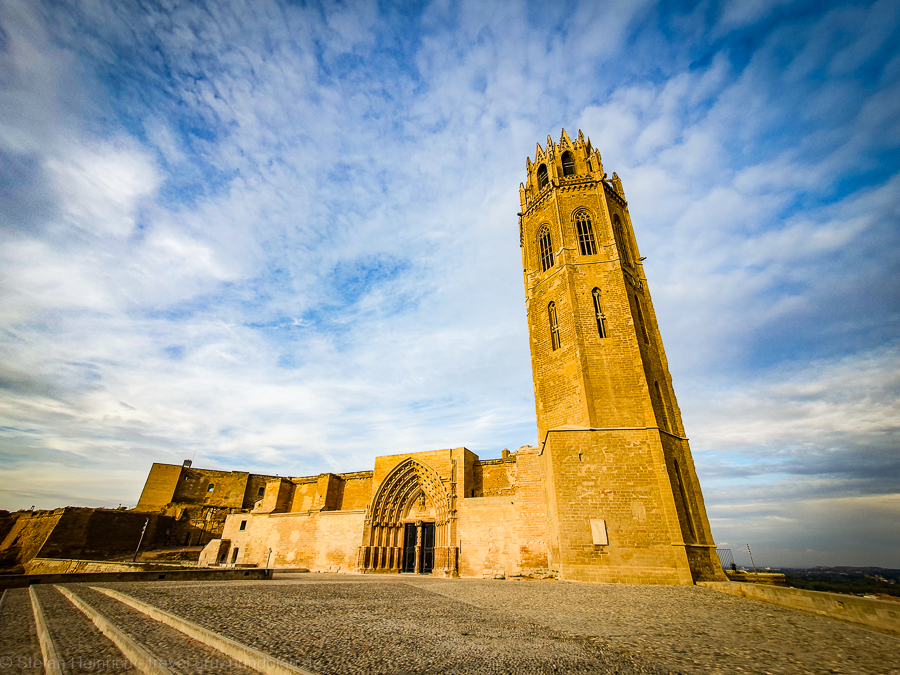
Lleida – The Shadow Over the Porta dels Apòstols The hot afternoon sun beat down mercilessly on the alleyways of Lleida, but I had no intention of breaking a sweat on my way up to the mighty Seu Vella cathedral. And why should I? Spain is the promised land for anyone who wants to conquer steep old-town hills without a single drop of perspiration on their brow. A low, metallic hum announced the urban luxury ahead: the city’s outdoor escalators. As the steps glided smoothly beneath me, carrying me meter by meter up the castle hill, I offered a silent prayer of thanks to Lleida’s visionary city architects. There is hardly anything more elegant than floating upward with hands in pockets, gliding past panting pedestrians, and watching the massive sandstone walls of the cathedral gradually emerge from a sea of rooftops. Reaching the top, I strolled over to the Porta dels Apòstols, the imposing main portal. Even from a distance, I could hear a resonant, well-trained voice. A tour guide, cloaked in the absolute authority of his office, stood with an index finger raised before a cluster of tourists who hung spellbound on his every word. I inconspicuously adjusted my pace, crossed my arms, and casually slipped into the outer edge of the group like a paying guest. The guide paused before a particularly ornate niche and dramatically lowered his voice: “Look upon these stones, senyores y senyores! The year is in the 14th century. The great master stonemason Bartomeu has been commissioned to create this portal. Years of his life were poured into the figures of the Apostles, but when it came to his masterpiece—the recess in the arch and the statue of the Virgin Mary—his luck ran out. His hands grew heavy, his mind weary. The figure remained stiff, cold, unfinished. Eventually, his young apprentice secretly took up the tools. In just a single night, driven by divine inspiration, the youth carved the face of the Madonna. When Bartomeu stepped onto the scaffolding the next morning, he couldn’t believe his eyes. It was a figure of such incomprehensible, flawless beauty that the stone itself seemed to breathe. But instead of awe, dark bile welled up inside Master Bartomeu. Envy consumed his heart. He could not bear the thought of being outshone by his own student. In a blind rage, he grabbed his heaviest mallet and struck the youth full in the face. The apprentice reeled, lost his footing, and plunged from the highest scaffolding to his death on these very cobblestones before the eyes of the horrified onlookers.” The guide took a well-calculated dramatic pause. But while the group murmured in awe, he slowly turned around. His gaze locked onto me. Throughout his entire monologue, he had been casting subtle, disapproving glances in my direction. It certainly hadn’t escaped his notice that I had joined his paying audience without contributing a single cent for a ticket. Now he saw his chance to humiliate the free-rider in front of everyone. He offered me a condescending, smirk-laden smile, pointed his index finger at me, and spoke loudly enough for even the last person in line to hear: “Well now… I must say, in my career I have certainly had better listeners than this gentleman here in the blue cap!” A few heads turned toward me with amused grins. The group waited for my embarrassment. But I didn’t so much as blink. I stepped half a pace forward, calmly tipped the brim of my cap, and replied in a steady, carrying voice: “Well, my dear sir—and I have certainly heard better legends than this exact one. In fact, I already know it. Exactly three months ago, I heard it at a church in Vilnius, the capital of Lithuania. There, too, it just so happened to be the very last stone on the facade that the apprentice carved far better than his master. And there, too, the master pushed the poor boy off the scaffolding out of pure envy.” I paused briefly to let the sentence hang in the air, then added with a smile: “Looks like stonemasons across medieval Europe had the exact same little PR problem.” A loud snort broke the ice. First an older gentleman in the front row burst out laughing, and then half the group joined in with hearty laughter. The guide turned bright red in an instant. His condescending smile froze on his face. He cleared his throat hurriedly, glanced at his watch, and clapped his hands together: “Well then! Moving along to the cloisters, we have very little time!” With brisk steps, he herded his group away. I remained alone at the Porta dels Apòstols, leaning comfortably against the cool sandstone wall and enjoying the view over the city—secure in the knowledge that even without a ticket, you sometimes get the best entertainment.
Bardenas Reales and the Song of the Semi-Desert Wind: The Legacy of Sanchicorrota

Bardenas Reales and the Song of the Semi-Desert Wind: The Legacy of Sanchicorrota Traveling in an old yellow postal van comes with its own set of rules. It’s a slow, honest way to drive. But the moment you cross the border into the Bardenas Reales—that bizarre, surreal desert of clay and sandstone in southern Navarre—the road abruptly transforms into a track of deep potholes, loose gravel, and fine, yellowish dust. I sat behind the wheel of my van-colossus, both hands gripping the steering wheel tightly as the vehicle crept step by step across the dried-up moonscape. Walking pace. The jagged terrain allowed for nothing more, unless you were willing to sacrifice your suspension on the altar of the semi-desert. There was not another soul in sight. No fellow vanlifers, no day tourists, not even a stray dog. Just the endless wasteland of deeply eroded canyons, dry riverbeds, and the sharp silhouettes of the cabozos—those mesa mountains jutting out of the earth like gigantic sculptures. And then there was the wind. It didn’t just blow; it ruled. The Cierzo, that notorious, ice-cold katabatic wind from the Ebro Valley, swept over my postal van, rattling its doors. It lifted thin veils of ocher dust from the earth and made the vehicle sway with a steady, menacing regularity. The deeper I ventured into the heart of the Bardenas, the louder the whistling became against the window seals. Eventually, I reached the icon of this no-man’s-land: Castildetierra. Rising sharply into the steel-blue sky like a massive pyramid sculpted by wind and weather, the clay pinnacle stood as a monument to transience, carved by millennia of erosion. I turned off the engine. The sudden silence inside the van lasted only a heartbeat before the wind began drumming against the bodywork. I took a deep breath, opened the driver’s door, and stepped out into the desert. The wind hit me like a physical force. It tugged at my jacket, roared in my ears, and whipped up sand that stung softly against my skin. Yet as I walked closer to the base of Castildetierra and let my eyes trace up the steep flank of the rock needle, the uproar shifted. The untamed howling of the Cierzo, caught in the fissures and caves of the jagged earth, acquired a melody. It became a rough, throaty, whispering frequency that seemed to rise not from the air, but directly out of the stone. When you drive alone in the silence for hours, your mind can play tricks on you. But in that moment, I was certain: the wind of the Bardenas was speaking to me. It whistled through the hollowed rock faces, and within its multi-layered hiss, words began to form. An ancient voice, weathered by sand, began to weave its tale: “Do you hear me, stranger on your four wheels? You drive slowly, yet you are not the first to seek refuge here from the eyes of the world. Five hundred years ago, this land belonged to no king, no bishop, and no army. It belonged to me. Sancho Rota was my name. But history calls me Sanchicorrota—the King of the Bardenas!” The wind blew sharper, spinning a spiral of dust directly at my feet, and the voice within the howl grew stronger, almost defiant: “Look at it, the mighty rock of Castildetierra! In its shadow and in the deep caves beneath your feet, my heart once beat. I was no ordinary thief. The rich, the proud merchants of Zaragoza and Tudela, trembled whenever they had to cross the desert. With my thirty loyal men, we lay in wait for them in the ravines. Gold, silk, grain—we took it from the sated. But we did not keep it for ourselves. We brought it to the starving shepherds and impoverished peasants of the Bardenas. To the Crown, I was a demon; to the people, a savior!” I zipped my jacket up to my chin. The wind blew so hard that tears welled in my eyes, but I couldn’t tear my gaze away from Castildetierra. It was as if the shadow of the bandit king were taking shape right against the rock face. “Do you know how to survive in a desert where two hundred knights are hunting you?” the Cierzo hissed softly and mischievously, as if whispering a secret into my ear. “Through cunning! Whenever the soldiers of King Juan II searched for my tracks in the dust, they found them. But the tracks never led to me—they led away from me! I had the horseshoes of my men’s horses nailed on backward! The fools followed the prints for miles in the wrong direction, while we sat behind their backs in the shadow of Castildetierra, laughing and drinking their wine.” A sudden gust of wind ripped at the hem of my hood, loud and cracking like a gunshot. “Yet no king tolerates a second ruler in his realm,” the voice boomed darker now, carried by a low, rumbling howl that vibrated through the canyons. “In March of 1452, they had had enough. The king sent an army. Over two hundred knights surrounded the Bardenas. They occupied every spring, every pass, every cave. There was no escape. They drove me here, to the foot of this rock.” For a brief, suffocating moment, the wind seemed to stand completely still. Not a grain of dust moved. The silence was as heavy as lead. “They wanted to take me to the gallows. They wanted to see my head on a pike to humiliate the people. But Sancho Rota bows his knee to no king! As the knights’ armor gleamed in the sun and the circle tightened, I drew my own dagger. One strike to my own heart—fast, cold, and free. I gave my life to the desert, but never my freedom!” A tremendous gust crashed through the clay ravines like a strike on a kettledrum. Dust swirled high, shrouding Castildetierra in an impenetrable yellow veil, turning the roar of the Cierzo into
The Secret of Titanium and Puppy’s Doghouse: When a Folding Bike Explains the Guggenheim
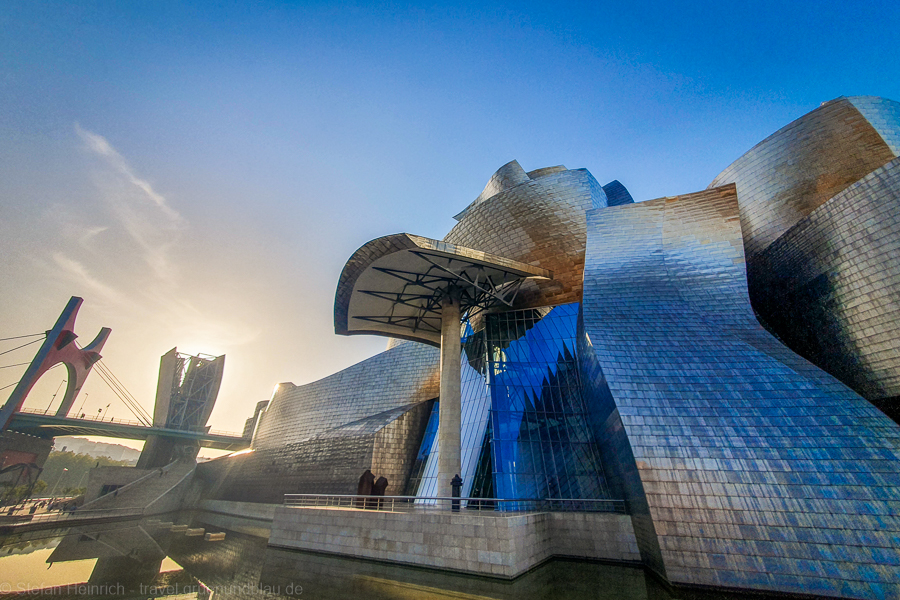
The Secret of Titanium and Puppy’s Doghouse: When a Folding Bike Explains the Guggenheim There are days when, as a full-time vanlifer, you feel like the undisputed king of the road. My morning in Bilbao was precisely one of those moments. I rolled into the city in my camper shortly after nine o’clock and rubbed my eyes in disbelief. Where was the infamous Spanish rush? Where was the usual bumper-to-bumper traffic, the honking chaos, the Southern hustle and bustle of rush hour? None of it. The streets were practically deserted, with only a few scattered souls strolling through the alleyways. “Wonderful!” I thought. “Bilbao belongs entirely to me today.” My destination was, of course, the Guggenheim Museum—the city’s architectural sanctuary. I parked the camper, grabbed my trusty folding bike, Rocinante, and pedaled off. For a photographer like me, this building isn’t just a structure; it’s a visual feast. Those sweeping titanium panels! Those organic shapes gleaming in the morning light like the scales of a gigantic, sleeping silver dragon! I pulled out my camera and snapped photos from every conceivable angle: from below, from above, from a worm’s-eye perspective, with the river flowing in the background. Hours flew by. Very gradually, a few more people trickled onto the plaza, but for a world-famous monument, it remained surprisingly uncrowded by 11:00 AM. To easily explore the grand outdoor staircases, I decided to briefly park my ride. Rising above the plaza in front of the museum was “Puppy”—a twelve-meter-tall giant puppy covered top to bottom in colorful flowers, created by Jeff Koons. A truly charming little fellow. I chained Rocinante to a post right next to the giant floral dog and immersed myself for another hour in the world of titanium reflections. When I finally returned and reached for the lock, my folding bike cleared its throat. Yes, Rocinante talks sometimes. You spend a lot of time together as a full-time vanlifer. “You are going to take a picture of Puppy too, aren’t you?” Rocinante asked in a tone that sounded suspiciously like subtle lecturing. I paused while unlocking and blinked. Normally, my bike stays strictly out of my photographic decisions. As long as I oil the chain and don’t slam it over curbs, it’s perfectly content. “Uh… sure,” I replied obediently, grabbed my camera, and dutifully took a few snapshots of the giant floral pup. Then I swung into the saddle, and we set off again. Hardly had the small wheels started rolling over the pavement when Rocinante chimed in: “Do you actually know what you’ve been photographing for hours?” “Well, obviously,” I said proudly, trotting out my amateur art history knowledge. “The Guggenheim Museum Bilbao! Designed by star architect Frank Gehry, completed in 1997. A masterpiece of deconstructivism consisting of 33,000 razor-thin titanium plates that saved the city from economic decline. A world-famous landmark!” Rocinante sighed audibly through the handlebars. “Oh, you naive shutterbug. What do you mean ‘grand landmark’? What do you mean ‘museum’? It’s a hut. A nice hut, mind you, but just a hut nonetheless.” I hit the brakes so abruptly that the coaster brake gave a soft squeal. “What do you mean, a hut?! It’s a modern icon!” “You parked me right next to Puppy for an hour,” my folding bike replied with complete conviction. “And we talked. He told me the whole truth. Back then, the people in city hall were trying to figure out how to properly house the greatest, most colorful, and best-behaved dog in the world. And since Puppy is a world-class dog, they built him a shelter out of the finest metal to keep a bit of rain off him. All the tourists actually come here just to see him! But because they’re embarrassed to admit they sat on a plane for hours just to pet a twelve-meter-tall flower puppy, they dutifully go into his doghouse afterward and pretend to care about modern art.” I stared down at my folding bike. “A 100-million-dollar titanium doghouse?” “From Puppy’s perspective, entirely appropriate,” Rocinante purred. “He even let slip that the roof is curved like that so the rain drains better when he sleeps under it. And the titanium? Reflects the sun so his flowers don’t wilt. Logical, isn’t it?” I couldn’t help but laugh. The idea that Frank Gehry’s true assignment was simply to design the most luxurious doghouse in human history had an undeniable poetry to it. It wasn’t until late afternoon, back at the camper after stowing Rocinante in the rear and sitting down at the dining table with a cup of coffee, that my eyes caught my travel calendar on the wall. I stared at the red date. October 12th. It hit me like a flash. It hadn’t been my brilliant timing strategy that made the streets so wonderfully empty in the morning. Nor was it because all the Spaniards were packed inside the Guggenheim. It was the Fiesta Nacional de España—the Spanish National Day! Half the nation was still comfortably tucked in bed or celebrating with family while I had been strolling through a deserted city. I leant back, chuckled, and looked back toward the folding bike. Sometimes a national holiday lets you enjoy a city all to yourself—but the truly great secrets of architecture are still best learned from a colorful flower dog and a precocious folding bike.
The Dance with the Giants: The Legend of San Fermín and the Origin of the Running of the Bulls
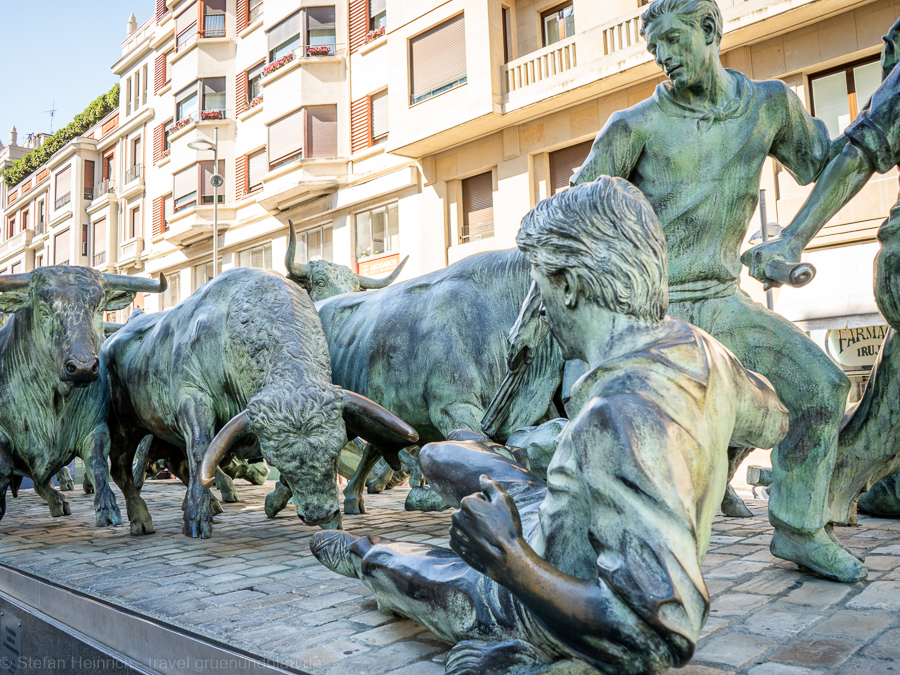
The Dance with the Giants: The Legend of San Fermín and the Origin of the Running of the Bulls The sun burned mercilessly down on the ochre-colored roofs of Pamplona as dust on the market square was kicked up by hundreds of excited footsteps. Anyone looking through the narrow, shaded alleyways of the old town today will see souvenir shops, bustling tapas bars, and white facades adorned with red balconies. Yet the foundation of this city rests upon the deep, faded tracks of legends that are centuries old. And none of these stories is more tightly interwoven with the city’s soul than that of San Fermín and the origin of the world-famous running of the bulls. The year is the 3rd century AD. Pamplona, known back then by its Latin name Pompelo, was a proud Roman outpost at the foot of the Pyrenees. Fermín was born into this bustling world shaped by pagan rites. As the son of a high-ranking Roman official, he enjoyed an impeccable education and, to this day, holds a reputation as a man of extraordinary intellect and deep compassion. It was an encounter with a wandering preacher named Honestus that changed young Fermín’s life forever. Fascinated by the message of charity and peaceful coexistence, Fermín renounced the privileges of his noble birth. He was baptized and dedicated his entire life to bringing hope to the people and building bridges between the hostile cultures of that era. Fermín’s reputation as an eloquent, fearless defender of the weak preceded him. He traveled far beyond the Pyrenees into what is present-day France. Wherever he went, he managed to unite people through sheer power of persuasion and charisma. But power and influence breed envy. The rulers of that time viewed his ever-growing esteem as a threat to their own authority. According to ancient lore, it was this conflict with the ruling class that ultimately led to his dramatic end. Fermín was arrested and thrown into a dungeon. Legend has it that they attempted to break his indomitable spirit by tying him to the chariot of enraged, untamed bulls and dragging him through the streets. Yet the legend took an unexpected turn: the mighty animals, originally intended as instruments of terror, sensed the man’s profound inner peace. Instead of crushing him, they trotted majestically by his side through the city gates, as if aware of the dignity of the moment. Fermín eventually passed away in the solitude of his cell, but from that day on, his myth was immortal. He was declared the patron saint of Pamplona—a symbol of resilience, courage, and the ability to appease even the wilder forces of nature. So how did the commemoration of a peaceful patron saint evolve into the world-famous spectacle of the encierros we know today? The answer lies not in ancient manuscripts, but in the pure pragmatism of medieval daily life. Centuries after Fermín’s death, Pamplona had developed into a major trading hub. Once a year, cattle farmers from the surrounding villages and the slopes of the Pyrenees traveled to the city to sell their most powerful bulls at the central market. The challenge was deceptively simple, yet dangerous: how do you safely transport a dozen multi-ton, unpredictable animals from the pastures outside the city gates through the narrow, winding residential streets to the arena in the main square? The herders’ solution was as bold as it was effective. Early in the morning, while the streets were still quiet, they drove the animals through the alleys at a gallop using loud shouts, cracking whips, and the help of lead steers. This is where the spirited temperament of Pamplona’s citizens came into play. The young men of the city didn’t want to just stand by and watch the butchers and herders. Fueled by respect for the imposing beasts and driven by a desire to prove their bravery, they began running ahead of the charging bulls. It was no act of aggression, but a razor’s-edge dance: who could manage to stay just inches ahead of the giants’ horns without losing their footing on the slippery cobblestones? Very quickly, this daily spectacle of driving cattle merged with the summer festival held in honor of Saint Fermín. The townspeople viewed the daring run ahead of the bulls as a symbolic act: just as Fermín had once fearlessly faced the forces of nature and the perils of his time, the runners now confronted the unpredictability of the animals. To invoke the protection of the saint, a tradition was born that remains unbroken to this day: a few minutes before the gates of the bull corrals are opened, hundreds of runners gather in their traditional white attire. Holding rolled-up newspapers in their hands, they gaze up at the small statue of San Fermín set into a niche of the city wall and chant their three-part prayer for his protection in unison. The red neckerchief—the pañuelico—worn by every visitor during the festival week may recall the saint’s devotion through its color, but above all, it serves as a symbol of absolute equality: before the bulls and before the patron saint, all people are equal. The running of the bulls in Pamplona is therefore far more than just a nerve-wracking traditional sport. It is the living monument of a city that learned not to fight the raw force of nature, but to face it with respect, humility, and a generous dose of courage.