








Sneakers, Servers, and Silicone: How Carlo Acutis Went from Teenager to the First Cyber-Saint
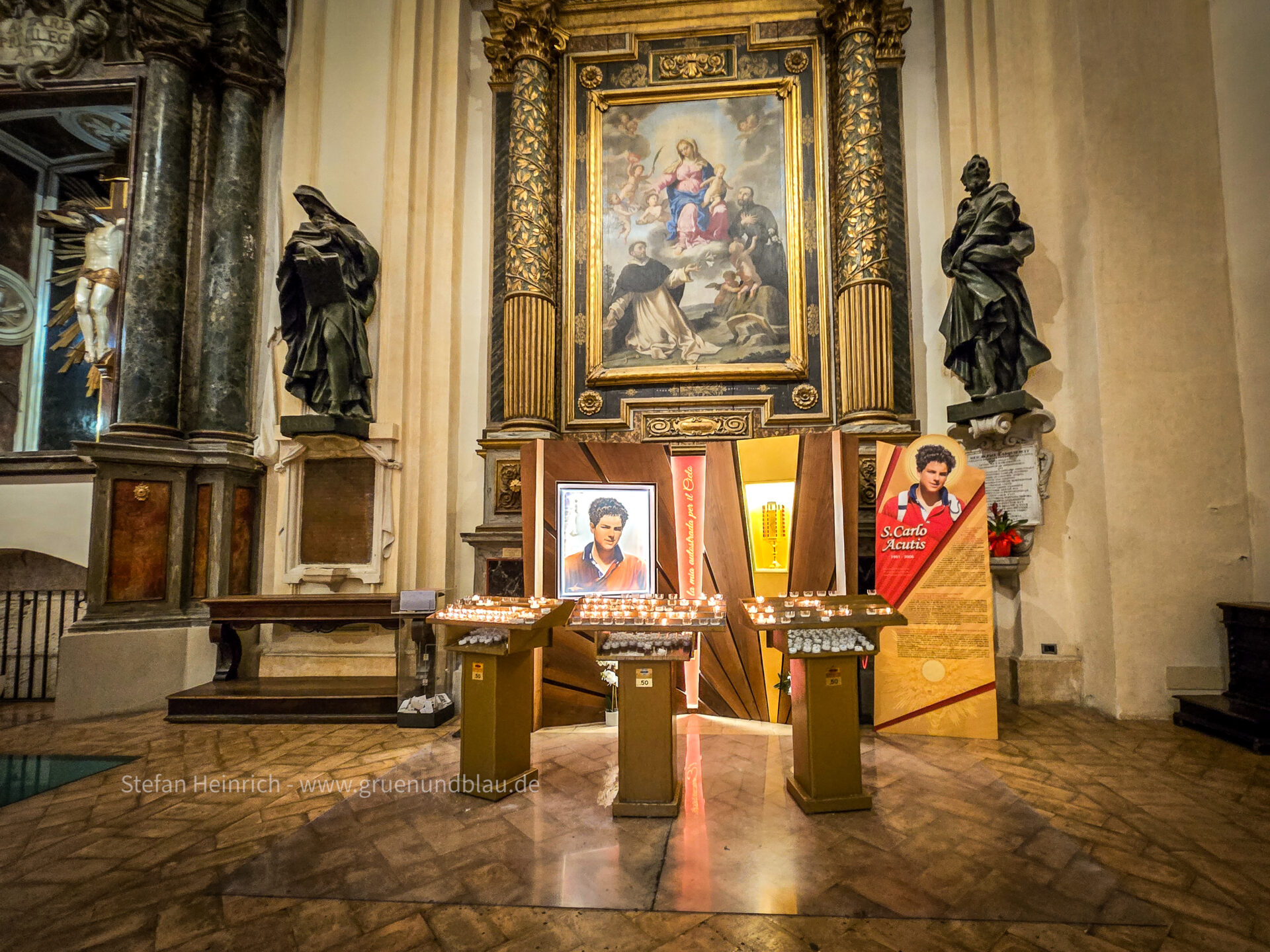
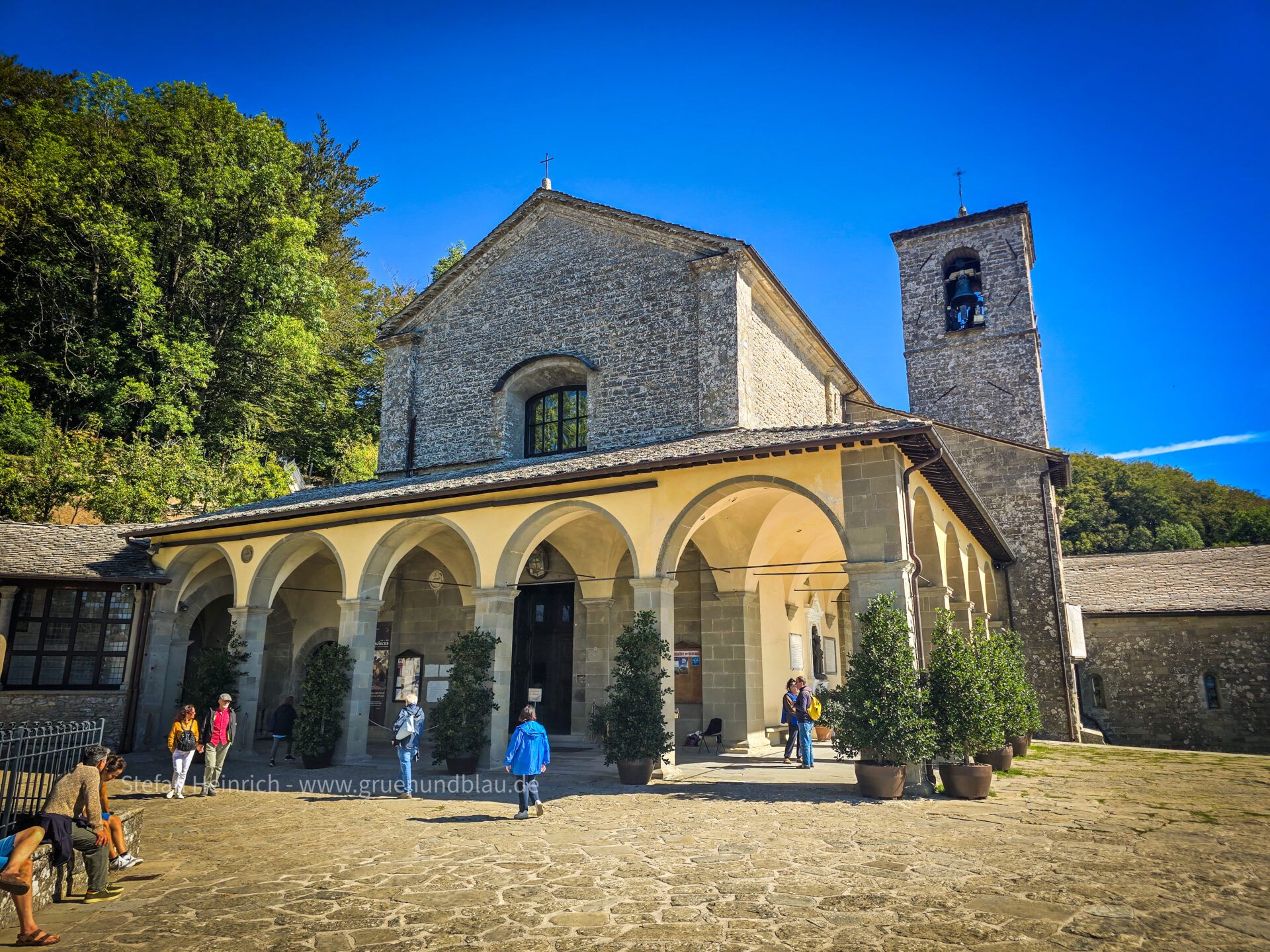
My recent experiences at the peak of La Verna had sparked my curiosity. If the medieval cult around stigmata and melting rocks worked so well, what did Umbria’s religious epicenter have in store? So I steered my camper south, climbing steeply up toward Assisi. Naturally, I expected the usual traces of Saint Francis. What I discovered there, however, surpassed anything I’ve encountered on four wheels in terms of sheer curiosity and staging: the story of Carlo Acutis.
Anyone who reads through official biographies, media reports, and Catholic Church documentation (feel free to check the facts yourselves; I’m relying purely on the results of my own research) comes across a canonization that couldn’t be placed more perfectly in the digital age.
Carlo was born in 1991. Just a normal teenager, you might think—yet he was fascinated by computer science and religion. At the tender age of eleven, he created a PDF document meticulously compiling 136 alleged eucharistic miracles—historical cases of host discolorations. (People also say he built a website, though there’s no evidence for that; all websites on the topic were registered after his death.) What began as a digital side project quickly gained massive momentum: the texts were printed out, displayed in Rome, and eventually traveled as a touring exhibition through an estimated 10,000 parishes worldwide.
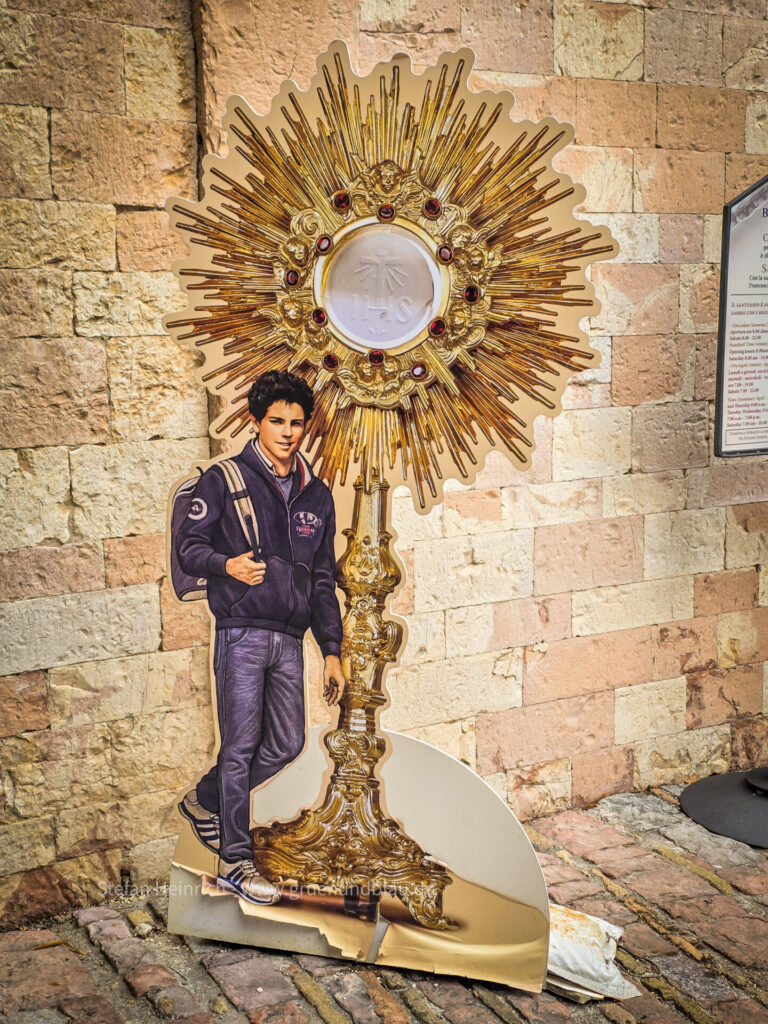
In October 2006, tragedy struck: at just 15 years old, Carlo succumbed to aggressive leukemia within a matter of days. He was buried in his family’s vault in Assisi. What followed was the birth of a modern myth. The media quickly dubbed him “God’s Influencer” or the “Cyber-Apostle.” The Vatican recognized the enormous potential of this narrative for reaching a younger audience.
For an earnest teenager to become a saint, Church rules require proven miracles. The first followed in 2010 in Brazil: a boy with a congenital pancreatic disease was allegedly cured after touching a piece of cloth from Carlo’s sweater. Researching the diagnosis reveals that this disease typically runs in flares, with many sufferers experiencing periods completely free of symptoms. For Rome, however, the incident was enough: the phenomenon was recognized as an official miracle, and Carlo was beatified in 2020.
The required second miracle wasn’t long in coming: a mother from Costa Rica prayed at the tomb in Assisi for her daughter, who was in a coma following a severe bicycle accident with traumatic brain injury. On that same day, the daughter reportedly began breathing independently again. With that, the path was clear: in September 2025, the teenager with the miracle PDF was officially canonized by Pope Francis.
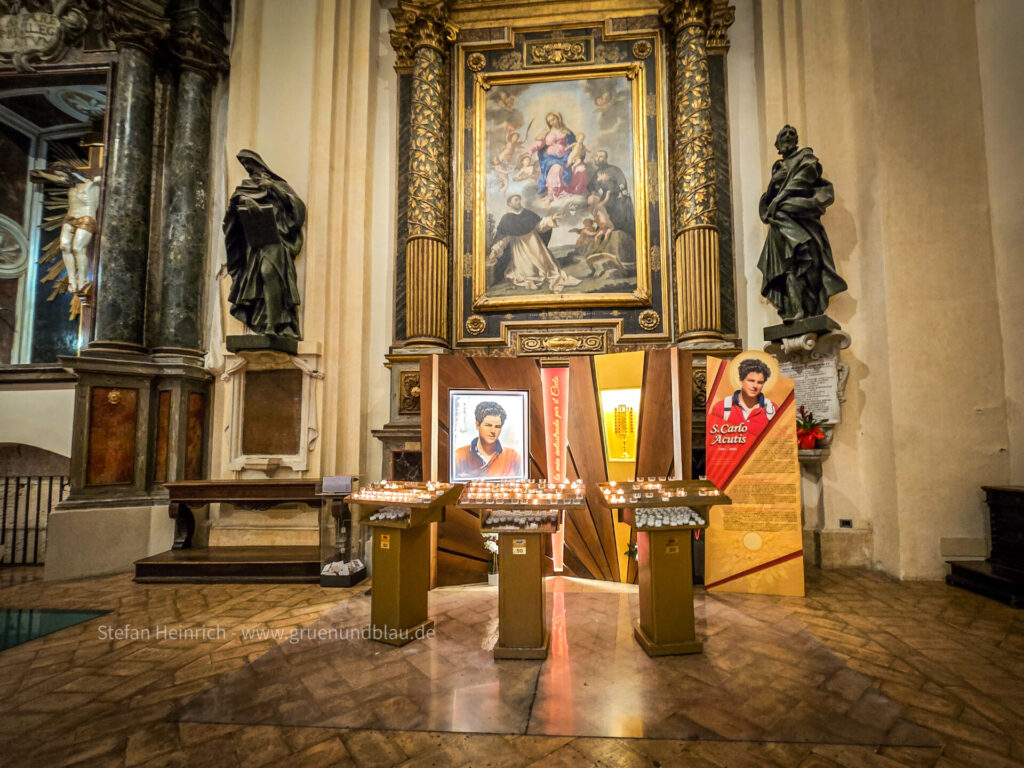
Up to this point, it sounds like a modern success story of faith. But wandering through Assisi, you encounter a side of this veneration that takes some getting used to, to put it mildly.
Back in 2019, Carlo’s body was exhumed from the family vault. During this procedure, his heart was removed—a relic henceforth kept in a precious shrine at the Basilica of Saint Francis and toured in display cases through various European cities. The rest of his body was initially displayed publicly in a wooden coffin and ultimately laid out in the church of Santuario della Spogliazione in Assisi.
There he lies to this day in an open glass coffin, dressed in everyday clothes: jeans, a sports jacket, and Nike sneakers. Standing before the casket, you look upon a flawless face and peaceful hands. A medical miracle? Not quite. The face and hands were elaborately remodeled and reconstructed from silicone to give the corpse an uncorrupted appearance and present posterity with the image of a sleeping boy.
I’ll spare you the photo of the corpse with a silicone face in a glass coffin, complete with a bench for visitors in front of it. Everything neatly set up with orderly access lanes.
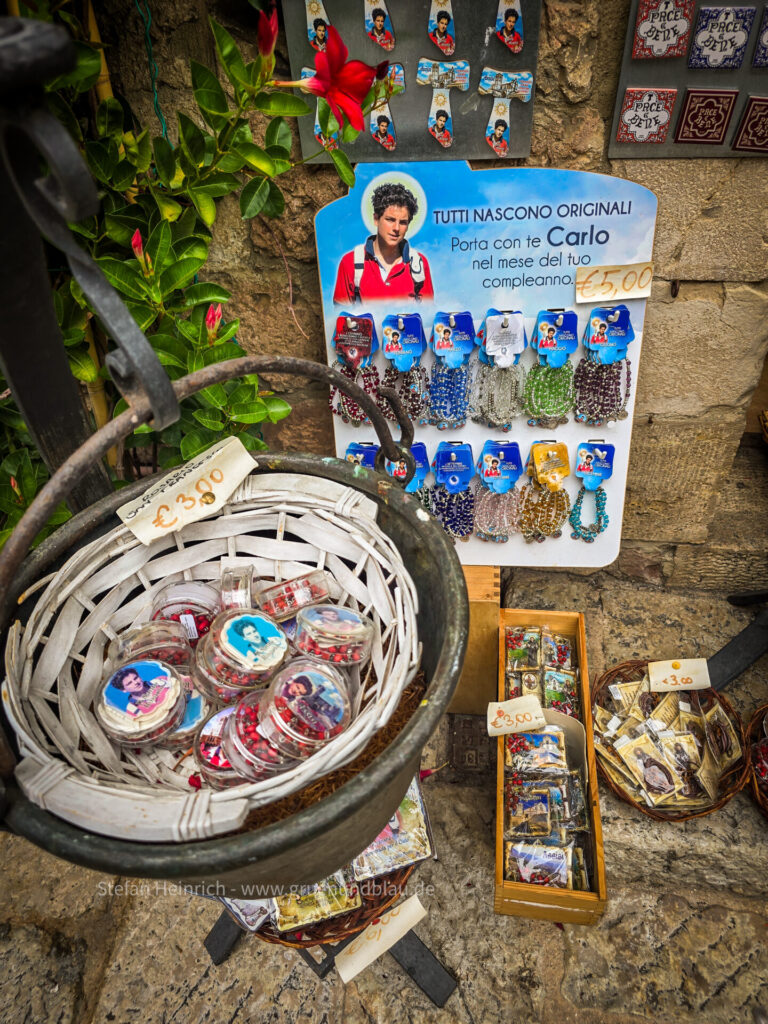
In the winding alleyways of Assisi, the “Cyber-Apostle” has long become a major economic factor. Alongside traditional Saint Francis statues, souvenir shops sell pins, keychains, prayer cards, and mugs featuring the image of the teenager in a tracksuit.
Standing against this historic backdrop, watching the streams of pilgrims before the glass coffin, you can’t help but wonder where the line lies between deep-felt devotion, modern event marketing, and a bizarre relic cult. I’ll leave the commenting to you at this point—form your own opinion.